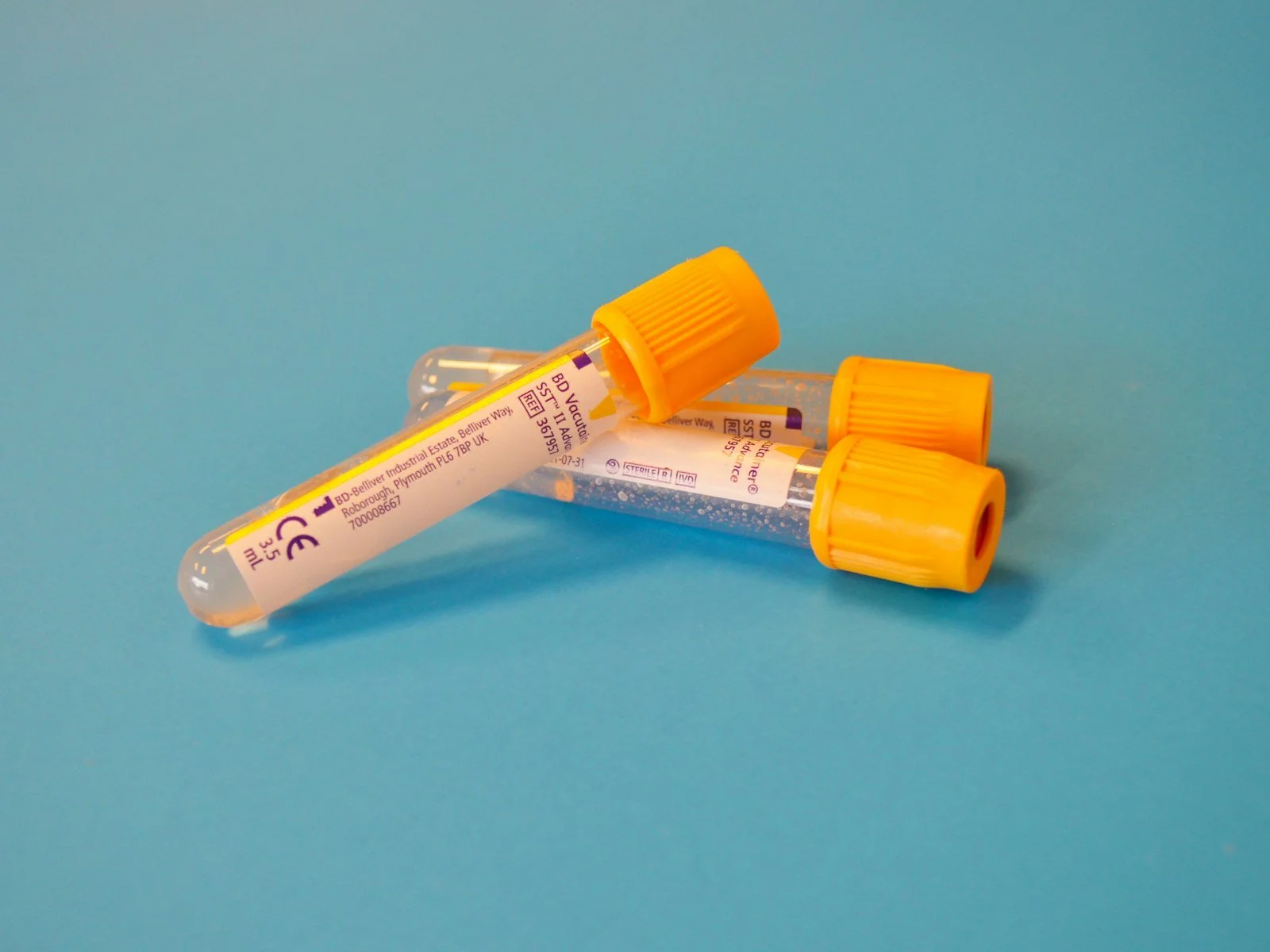
Photo by Testalize.me on Unsplash
It's one of the most common — and most frustrating — sentences Sarah hears. Here's what's actually going on.
In short: A “normal” lab result means your number fell somewhere inside a wide reference range built from the general population — not that it's the right number for you, and not that hormones aren't part of what you're feeling. Reference ranges are wide on purpose, hormone levels fluctuate day to day, and how you feel at any given number varies from person to person. That's why treatment at Restoration Healthcare starts with your symptoms and your history, not a single lab result in isolation.
What “normal” actually means on a lab report
A reference range is built by taking a large group of people, measuring a hormone or marker, and calling the middle band "normal." It's a statistical range, not a personal one. It doesn't know your baseline, your symptoms, or where you actually feel your best — it only knows where most people happen to fall. Falling inside that range tells you a number isn't extreme. It doesn't tell you it's right for you.
Why this happens so often with hormones specifically
Hormones fluctuate — sometimes hour to hour, sometimes month to month, especially during perimenopause or with testosterone through the day. A single blood draw is a snapshot, not a movie. Depending on the day, the time, and where you are in that fluctuation, the same person can land in very different places on the same test. That's part of why one normal-looking result doesn't settle the question on its own.
It happens to both women and men
For women, this often shows up during perimenopause — hot flashes, brain fog, mood changes and sleep problems, paired with labs that come back looking unremarkable. See the common early signs of perimenopause → For men, it shows up with testosterone — low energy, low drive, weight around the middle, with a number that's technically inside range but nowhere near where they used to feel their best. See the common signs of low testosterone →
"I treat based on your symptoms, and not necessarily only on your labs."
What actually helps
The fix isn't ignoring labs — it's not treating them as the only input. At Restoration Healthcare, a first visit combines a full hormone and metabolic panel with a real conversation about how you're actually feeling, and the two get weighed together. If something needs adjusting, it gets adjusted based on your response over time, not a single snapshot from one appointment.
Common questions
If my labs are normal, does that mean nothing is wrong?
Not necessarily. A normal-range result rules out some things, but it doesn't automatically explain why you feel the way you do — and it doesn't mean your symptoms aren't real or aren't worth addressing.
Why would two people with the same lab number feel completely different?
Reference ranges are built from a broad population. Where you personally feel your best isn't always the same as the middle of that range, which is why symptoms matter as much as the number.
What does Restoration Healthcare do differently?
Labs are one part of the picture, not the whole picture. Sarah treats based on your symptoms and your full history, not a single number in isolation, and reviews results with you line by line rather than sending a one-line portal message.
Ready to talk it through? Book a first visit with Sarah Murphy, NP, in person in Hinsdale or by telehealth anywhere in Illinois.